
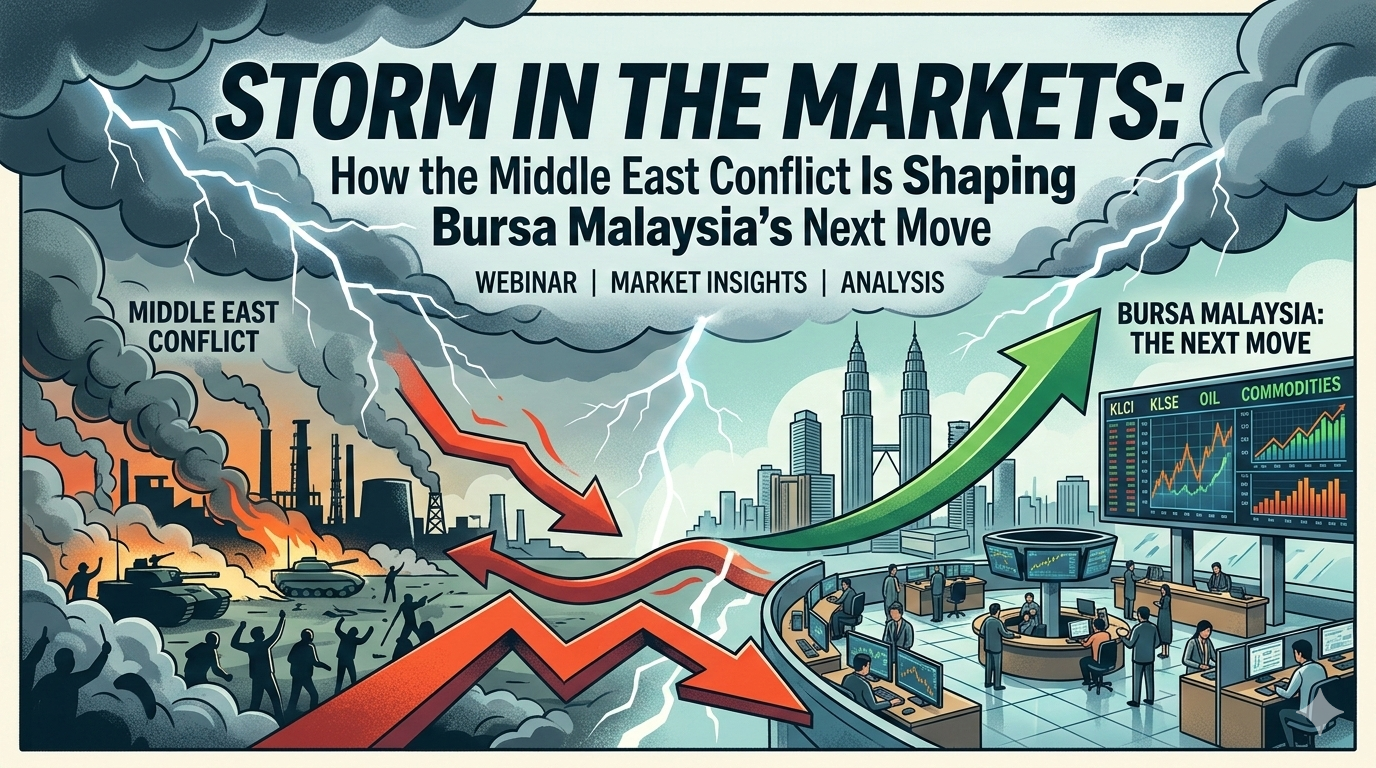

As headlines across the world flash heavy artillery and rising geopolitical tensions, global markets have reacted sharply — and Bursa Malaysia is no exception. Recent escalations in the US-Israel conflict with Iran have reverberated through commodity prices, investor sentiment, and trading activity in Kuala Lumpur and beyond.
1. Geopolitical Shockwaves Hit Global Markets
The latest developments in the Middle East — particularly intensified military strikes and reprisals involving Iran — have triggered broad market sell-offs in major indices around the world. Risk assets like equities have fallen as energy costs surge and inflation worries mount.
Globally:
- Major stock markets saw sharp losses — from the FTSE 100 to Asia’s key bourses.
- Oil and gas prices have jumped, feeding inflation expectations and supply-chain pressure.
This geopolitical risk backdrop has created a risk-off environment that investors generally dislike — pushing them toward cash, bonds, or safer haven assets.
📉 2. Bursa Malaysia: Mixed Signals but Clear Caution
Bursa Malaysia’s reaction reflects a tug-of-war between risk aversion and sector-specific opportunity:
Market Downside Pressure
- The FBM KLCI has recently retreated and opened lower amid renewed geopolitical jitters. Broad indices like the FBM70 and FBM Emas have also slid as investor sentiment turned cautious.
Sector Divergence
- Energy stocks have outperformed — buoyed by rising oil and gas prices. The Energy Index snapped a multi-day gain, up over 6% in just two sessions as crude prices climbed.
- Defensive sectors like consumer staples and utilities have seen mixed flows — while cyclical or export-linked sectors remain vulnerable to risk-off positioning.
Sentiment Dynamics
- Analysts point to elevated risk aversion, leading funds to rotate out of equities and into perceived safer assets.
This pattern — a market weakening overall but with pockets of strength — is characteristic of geopolitical uncertainty environments.
3. Oil Price Surge: The Ripple Effect
One of the most direct mechanisms linking the conflict to Bursa’s performance is through energy prices:
- Disruption in key shipping routes like the Strait of Hormuz has pushed crude oil and LNG prices higher, as insurers pull back and tankers reroute — increasing supply risk premiums.
- Higher energy prices often bolster local energy and commodity-linked equities, even while broader markets soften.
The result? Energy sub-indices on Bursa have climbed, while sectors sensitive to economic outlooks — banking, industrials, and export-oriented stocks — have seen selling pressure.
4. Broader Economic Impact on Malaysia
Beyond stocks, the war’s effects extend into the real economy:
Costs and Inflation
- Economists warn transport and food prices could rise as higher logistics and fuel expenses are passed on to consumers — adding inflationary pressure.
Currency and capital flows
- The ringgit has shown resilience, trading near stable levels even as volatility persists in global risk assets.
Trade exposure
- Government officials highlight that direct trade with conflict zones is minimal for Malaysia, limiting direct trade shock but not shielding indirect channels such as import-linked costs.
Experts generally view the knock-on effects as moderate so long as tensions don’t widen further — though cost pressures and investor sentiment remain watch points.
5. What Investors Should Watch Next
Short-term Signals
- Volatility in oil and energy markets
- Rotation between cyclical and defensive sectors
- Global risk sentiment and bond yields
Intermediate Risks
- Inflationary pressures filtering through local consumer prices
- Corporate earnings impacted by higher input costs
- Capital inflows/outflows tied to global risk appetite
Longer horizon
- Potential escalation in the broader Middle East could widen impacts, making macroeconomic scenarios and central-bank responses critical variables.
Takeaway for Bursa Malaysia Traders
- Expect heightened volatility and occasional divergence among sectors.
- Energy and commodity plays may offer tactical opportunities amid risk-off equity flows.
- Risk management is key—geopolitical uncertainty often translates into rapid sentiment swings across global and local markets.
For ongoing updates on how war news continues to shape Bursa markets, stay tuned to www.mybursawatch.com — your source for focused equity insights.

Leave A Comment