
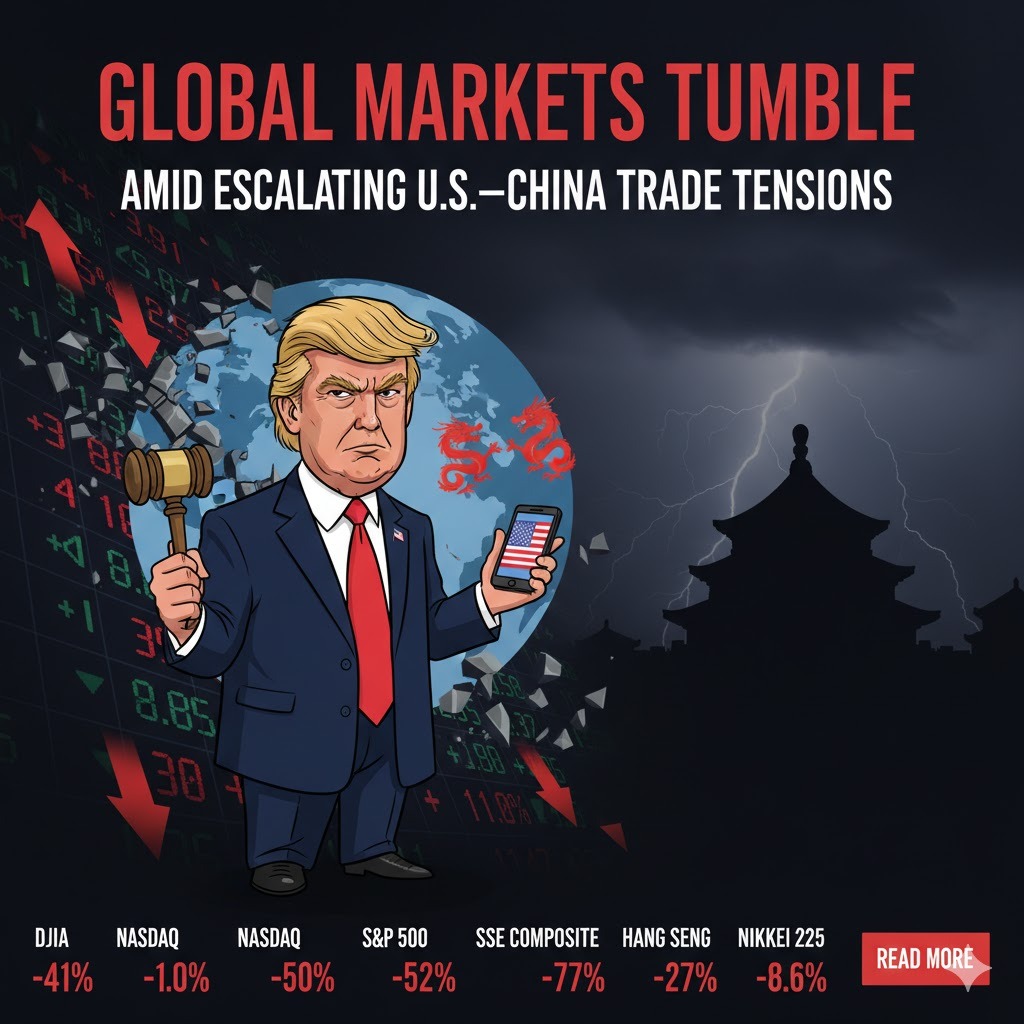

Global markets are in a state of turmoil as escalating U.S.–China trade tensions trigger sharp declines across China, Hong Kong, and U.S. stock markets. Investors are reacting to recent announcements that signal the potential for a full-blown trade war with far-reaching effects.
What’s Happening?
U.S. President Trump recently announced plans to double tariffs on Chinese imports (effectively a 100% tariff) and impose export controls on critical software. These measures were framed as retaliation against China’s restrictions on rare earth material exports, which are crucial for technology, electronics, and defense industries.
In response, China has introduced countermeasures, including new port fees on U.S.-linked ships docking in Chinese ports. Both nations have already engaged in multiple rounds of tariffs and export restrictions, creating a tense environment for global trade.
The escalating tariff threats are fueling uncertainty and fear that supply chains could be disrupted, potentially slowing global economic growth.
Why Are Markets Crashing?
Several factors are driving the sharp sell-offs in Hong Kong, China, and U.S. markets:
1. Trade War Shock & Uncertainty
When the two largest economies in the world threaten massive tariffs, investors anticipate reduced trade, lower corporate earnings, and supply chain disruptions, triggering sell-offs.
2. Exposure to China & Technology Sectors
Many global companies are heavily dependent on Chinese supply chains and tech exports, particularly in semiconductors and rare earth materials. Trade restrictions directly threaten these sectors, leading to sharper declines in stock prices.
3. Global Contagion & Investor Sentiment
Market drops in the U.S. often ripple globally. Fear and risk aversion drive investors to liquidate positions in other markets, including Asia and Europe.
4. Hong Kong as a “Window to China”
Hong Kong’s stock market (Hang Seng Index) is more open to foreign investors and short-selling, making it highly sensitive to bad news. Recent tariff threats caused a sharper sell-off in Hong Kong compared to regional peers.
5. Valuations & Overbought Conditions
Many markets, especially in the U.S., were already richly valued. The tariff threat acted as a trigger, prompting investors to take profits and hedge risks.
6. Flight to Safe-Haven Assets
During crises, investors typically move capital into safer assets such as government bonds, gold, or stable currencies, reducing demand for equities, particularly in emerging markets.
Key Events to Watch Next Week
Investors should keep an eye on the following developments:
- Tariff Implementation – Will the new tariffs be enacted? What are the enforcement timelines and details?
- China’s Countermeasures – Any new fees, tariffs, or export restrictions.
- Diplomacy & Negotiations – Statements or talks between U.S. and China could ease tensions.
- Earnings Reports – Companies heavily exposed to China could reveal impacts on profits.
- Central Bank or Government Actions – Stimulus or support measures may calm markets.
How MyBursa Watch Helps You Navigate Market Volatility
Investing during turbulent times can be overwhelming—but MyBursa Watch is here to help. Here’s how:
- Real-Time Market Updates – Stay on top of breaking news and trade developments as they happen.
- Insights & Analysis – Understand the impact of tariffs, policies, and global events on your portfolio.
- Portfolio Tracking Tools – Monitor your investments and make informed decisions quickly.
- Community Interaction – Join discussions with other investors, share strategies, and gain perspective.
- Educational Resources – Learn about trading, risk management, and market trends to improve your investing skills.
With MyBursa Watch, you’re not just reacting to the market—you’re strategically navigating it with knowledge and confidence.
💬 Join the conversation! How are these U.S.- China trade tensions affecting your investment decisions? Share your thoughts in the comments below and connect with other MyBursa Watch readers.

Leave A Comment